Forskjell mellom versjoner av «Main Page»

Fra heimskringla.no
Hopp til navigering Hopp til søk
Linje 51: Linje 51:
  
  
:[[Fil:Daniel Bruun 2.jpg|left|200px]]
+
:[[Fil:Beowulfrytter.png|left|180px]]
:::::::::::<big><big><FONT COLOR=darkblue>'''[[Erik den Røde og nordbokolonierne i Grønland]]'''</big></big><br>By ''Daniel Bruun'', 1931<br><br>Daniel Bruun’s '''Erik den Røde og nordbokolonierne i Grønland''' ''(Erik the Red and the Norse Colonies in Greenland)'' is an archaeological and historical study of the Norse settlements in Greenland from their founding to their disappearance. Based on Bruun’s own fieldwork and excavations, the book combines archaeological evidence with saga literature, medieval written sources, and topographical analysis. It examines farmsteads, churches, the episcopal seat at Gardar, as well as daily life, economic activities, and contacts with Iceland and Europe. The discovery of Vinland is also discussed. The role of Erik the Red and the gradual decline of the colonies are central themes. The work remains a foundational contribution to the study of Norse Greenland and its place in the medieval North Atlantic world.</FONT COLOR=darkblue>
+
::::::::::<big><big><FONT COLOR=darkblue>'''[[Beowulf og striden um Finnsborg]]'''</big></big><br>By ''Henrik Rytter'', 1921<br><br>Henrik Rytter’s ''Beowulf og striden um Finnsborg'' is the first complete Norwegian translation of the Old English heroic poem ''Beowulf''. Rytter rendered the work into Nynorsk and sought to preserve both its alliterative verse form and its archaic tone. At the same time, he strove to convey the rhythm and epic power of the original, adhering closely to its structure and imagery. The translation is marked by a consciously Nordic and historical language intended to bring the poem closer to the shared Nordic cultural heritage. Rytter’s version is an important contribution to the transmission of medieval heroic poetry in modern Norwegian.<br><br>This is '''Heimskringla’s''' fifth version of the poem ''Beowulf''.</FONT COLOR=darkblue>
  
 
| style="margin: 10px 10px 0 0; border: 2px solid #dfdfdf; padding: 0em 1em 1em 1em; background-color: #E6F3FF" width="40%" valign="top" |
 
| style="margin: 10px 10px 0 0; border: 2px solid #dfdfdf; padding: 0em 1em 1em 1em; background-color: #E6F3FF" width="40%" valign="top" |

Revisjonen fra 8. jun. 2026 kl. 11:22

Facebook 2.png Følg os på Facebook    Logo 3.png   Har du husket å støtte opp om ditt favoritt kulturprosjekt? Gi et bidrag og Bli en Heimskringla-venn

Dansk.gif

Engelsk.gif

HEIMSKRINGLA


Velkommen transparent.png

HEIMSKRINGLA is the largest collection of Old Norse and Nordic source texts on the internet – currently some 9000 titles.

HEIMSKRINGLA primarily consists of Eddic texts, sagas, and skaldic poetry, as well as background material and sources on Sami, Finnish, and Greenlandic culture.

HEIMSKRINGLA is based on the belief that these texts – as part of our shared cultural heritage – should be freely accessible to everyone.


SHOP


Källskrifter till Lapparnas mytologi- Cover.jpg

Nordisk Åndsliv Cover.png

Beda cover.jpg
Widukind cover.png
Ansgars liv - cover.jpg

Grågås Cover.jpg

Island i fristatstiden cover.png

WE PRESENT: digitalized


Beowulfrytter.png
Beowulf og striden um Finnsborg
By Henrik Rytter, 1921

Henrik Rytter’s Beowulf og striden um Finnsborg is the first complete Norwegian translation of the Old English heroic poem Beowulf. Rytter rendered the work into Nynorsk and sought to preserve both its alliterative verse form and its archaic tone. At the same time, he strove to convey the rhythm and epic power of the original, adhering closely to its structure and imagery. The translation is marked by a consciously Nordic and historical language intended to bring the poem closer to the shared Nordic cultural heritage. Rytter’s version is an important contribution to the transmission of medieval heroic poetry in modern Norwegian.

This is Heimskringla’s fifth version of the poem Beowulf.
WE PRESENT: on print


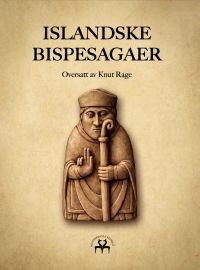
Islandske Bispesagaer cover.jpg
Islandske Bispesagaer
By Knut Rage, 2026
The Icelandic bishops’ sagas have long lived in the shadow of Snorri Sturluson’s kings’ sagas, Flateyjarbók, and the Icelandic family sagas. This volume gathers some of the most important bishops’ sagas in chronological order. Alongside their vivid and reliable picture of the first centuries of Christianity in the Nordic world, they rival both Snorri’s kings’ sagas and the family sagas in conflict and dramatic events. Knut Rage (born 1952) is a Norwegian author and local historian who has written and translated numerous books and articles on medieval history and the Norse heritage. Some of the sagas in this collection have never before been translated into Norwegian.

Order here: Heimskringla Reprint.
Recent texts


20px   Previous    New texts
Special features


Nokkur handrit2.gif


  • E-Library: Links to some 400 books - all available online.
  • Gallery: Visit Heimskringla's gallery of historical sites etc.
  • Biographical Index: Briefly on manuscript collectors, scholars, and authors who have had an influence on the conservation, publication and interpretation of Old Norse source material.


About the HEIMSKRINGLA-project and the people behind it


O